
Say more than Like or repost
On X, a like and a repost are the same two buttons for agreement, amusement, sympathy, and alarm. Pick the emoji that fits instead of choosing between a heart and a boost.
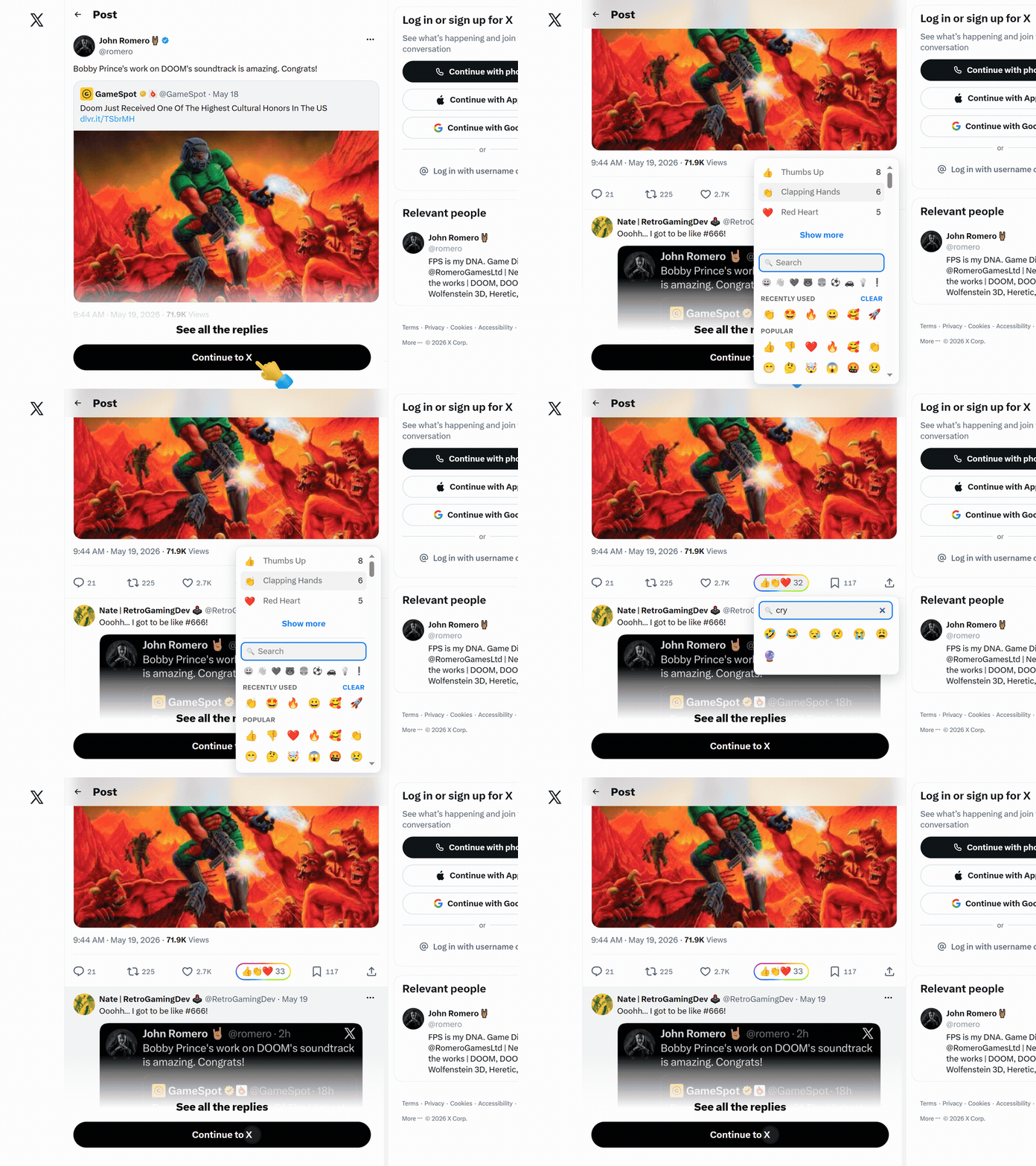
On X, a like and a repost are the same two buttons for agreement, amusement, sympathy, and alarm. Pick the emoji that fits instead of choosing between a heart and a boost.
A reaction strip shows whether a post landed as heartfelt, funny, doubtful, or infuriating, which is a faster read than scrolling the whole reply thread.
Webemoji doesn't touch X's own controls. Keep Like and repost for reach and add emoji when the two buttons don't say what you mean.
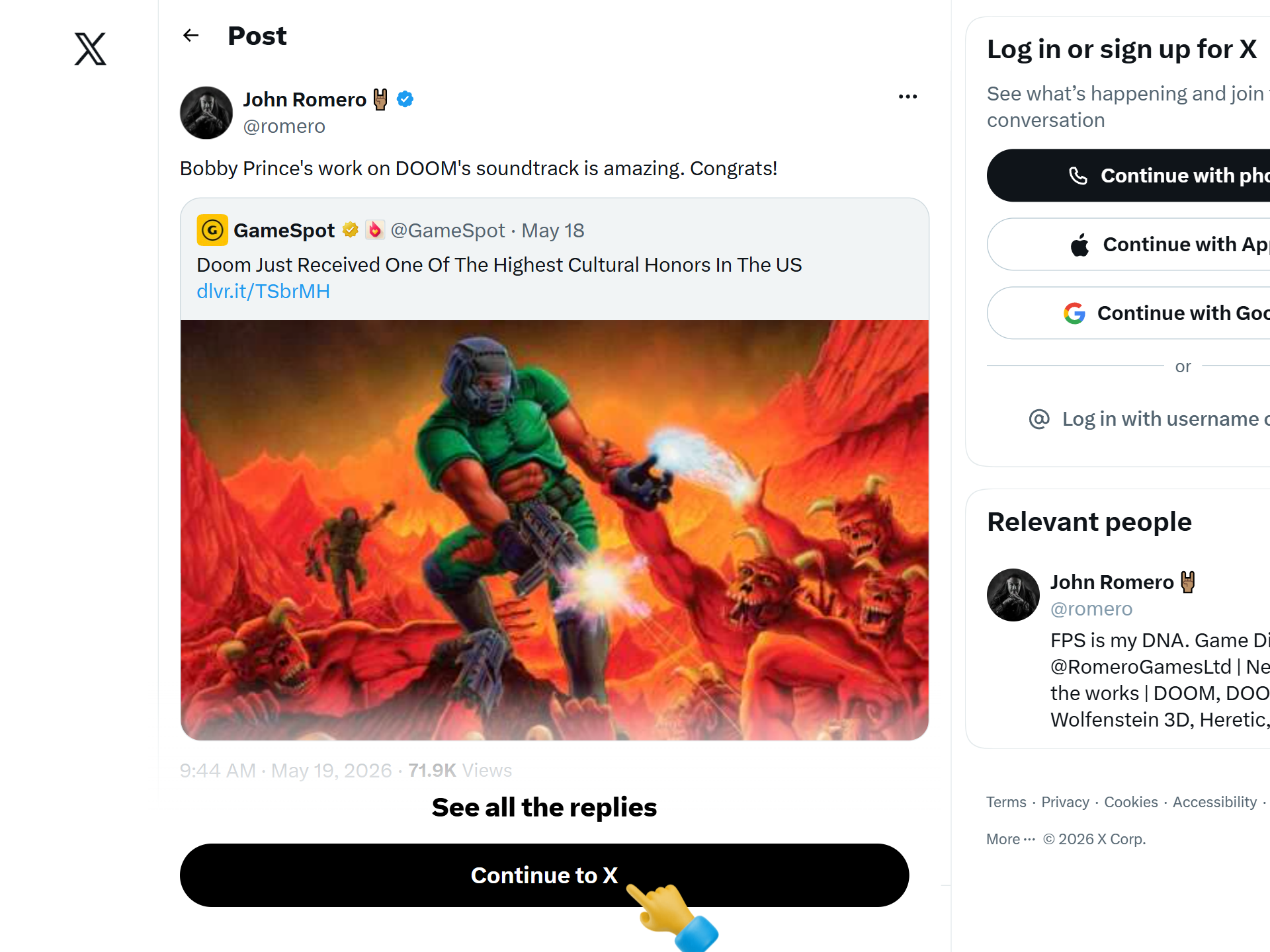
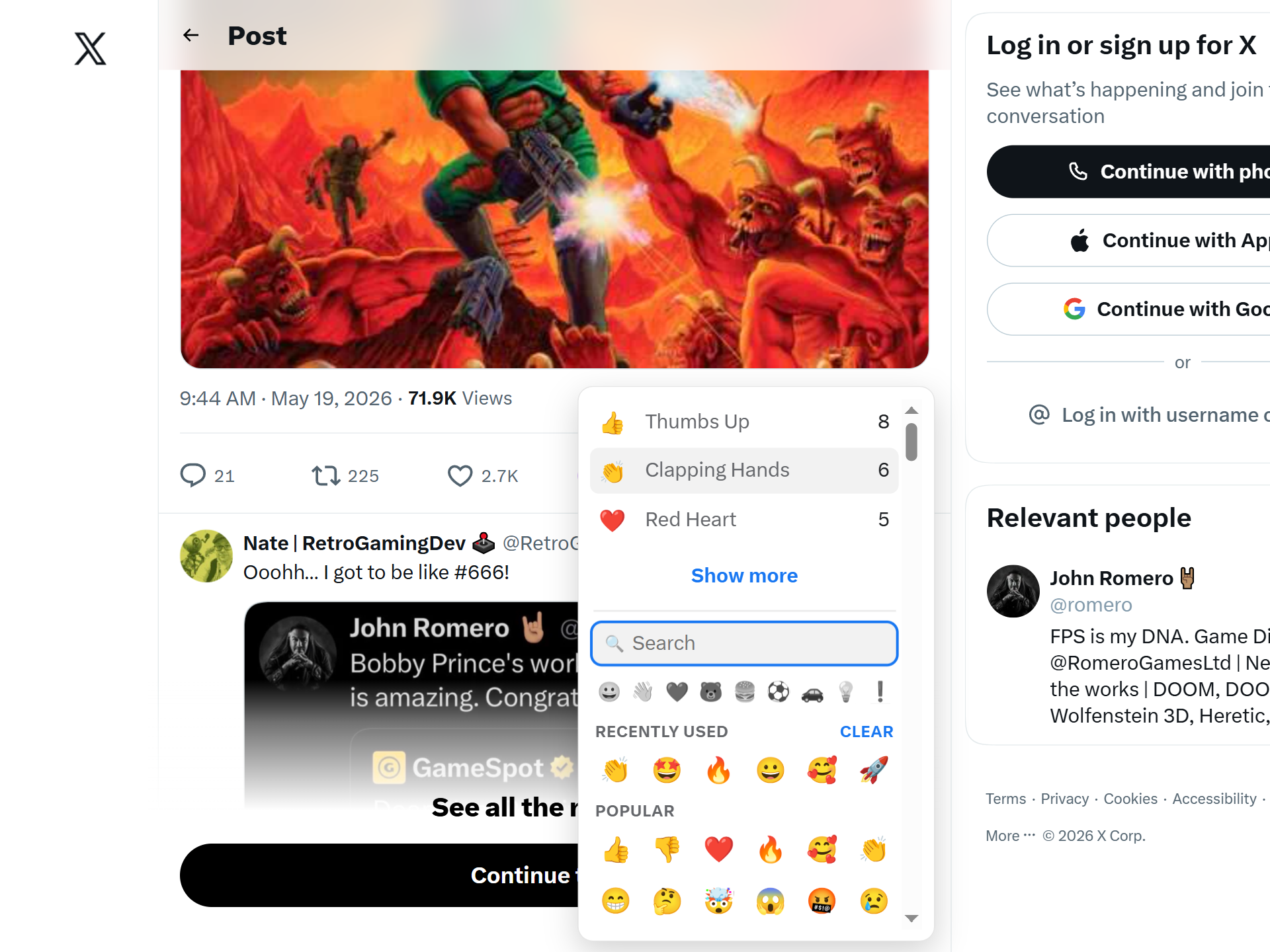
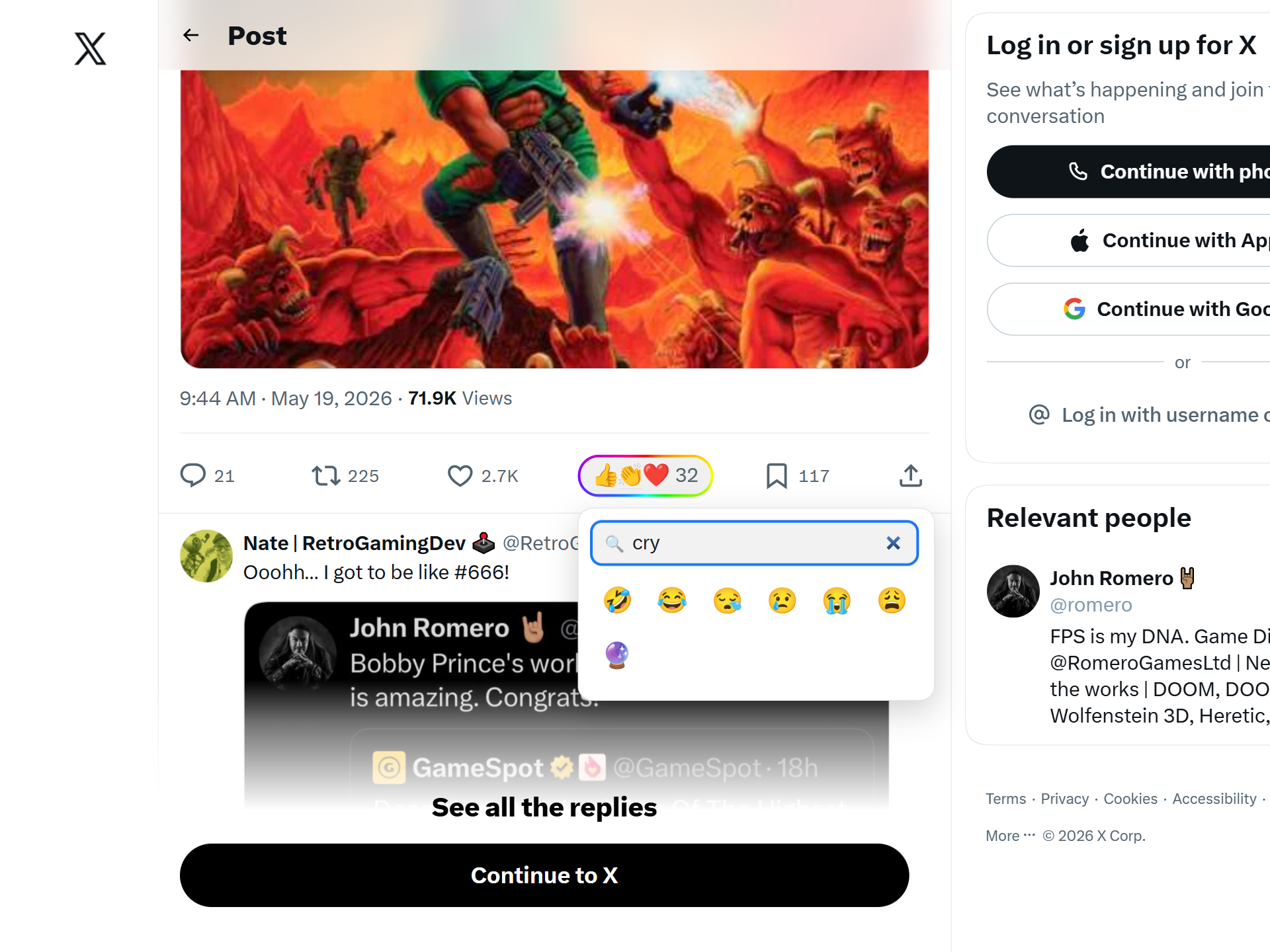
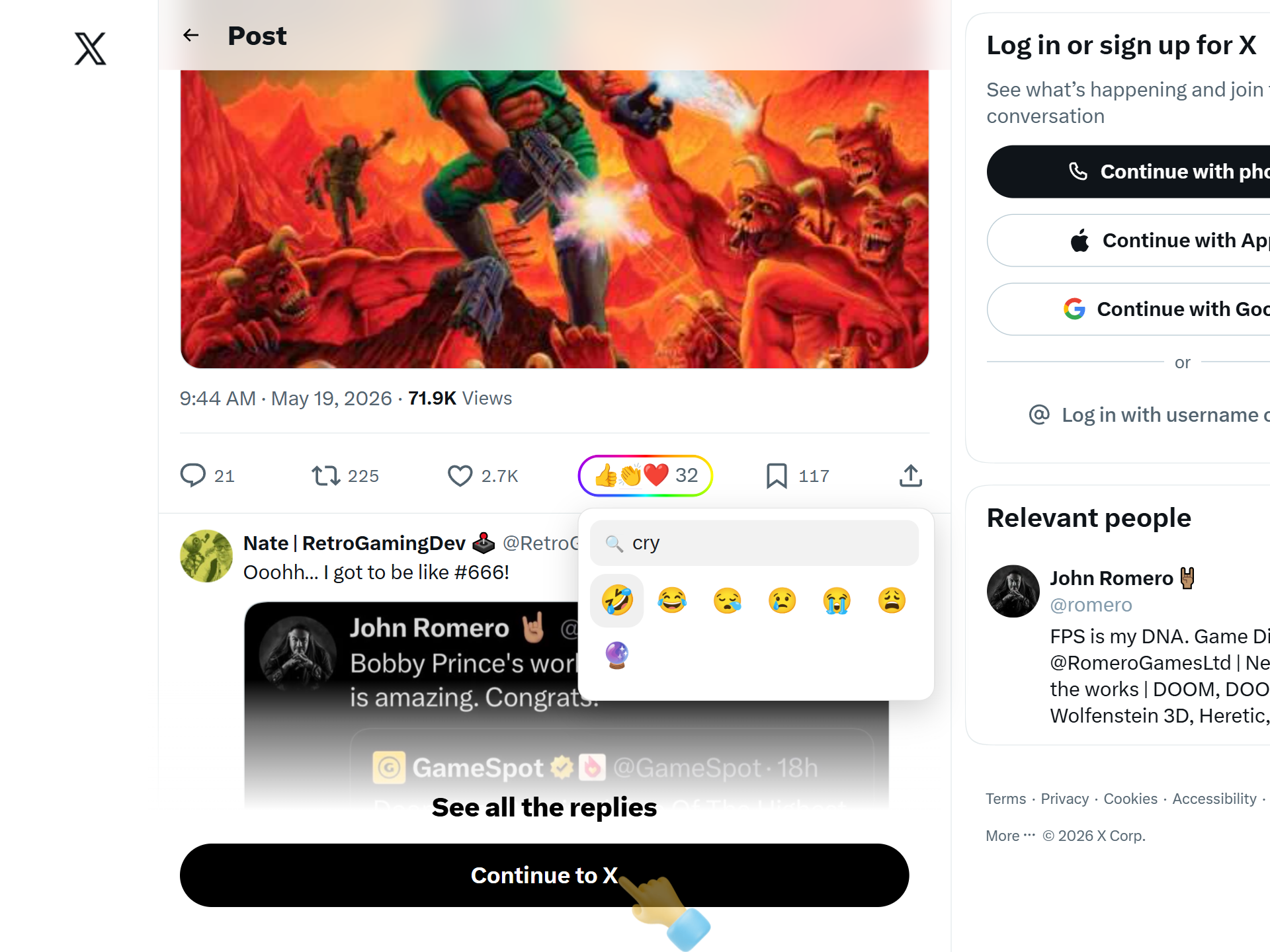
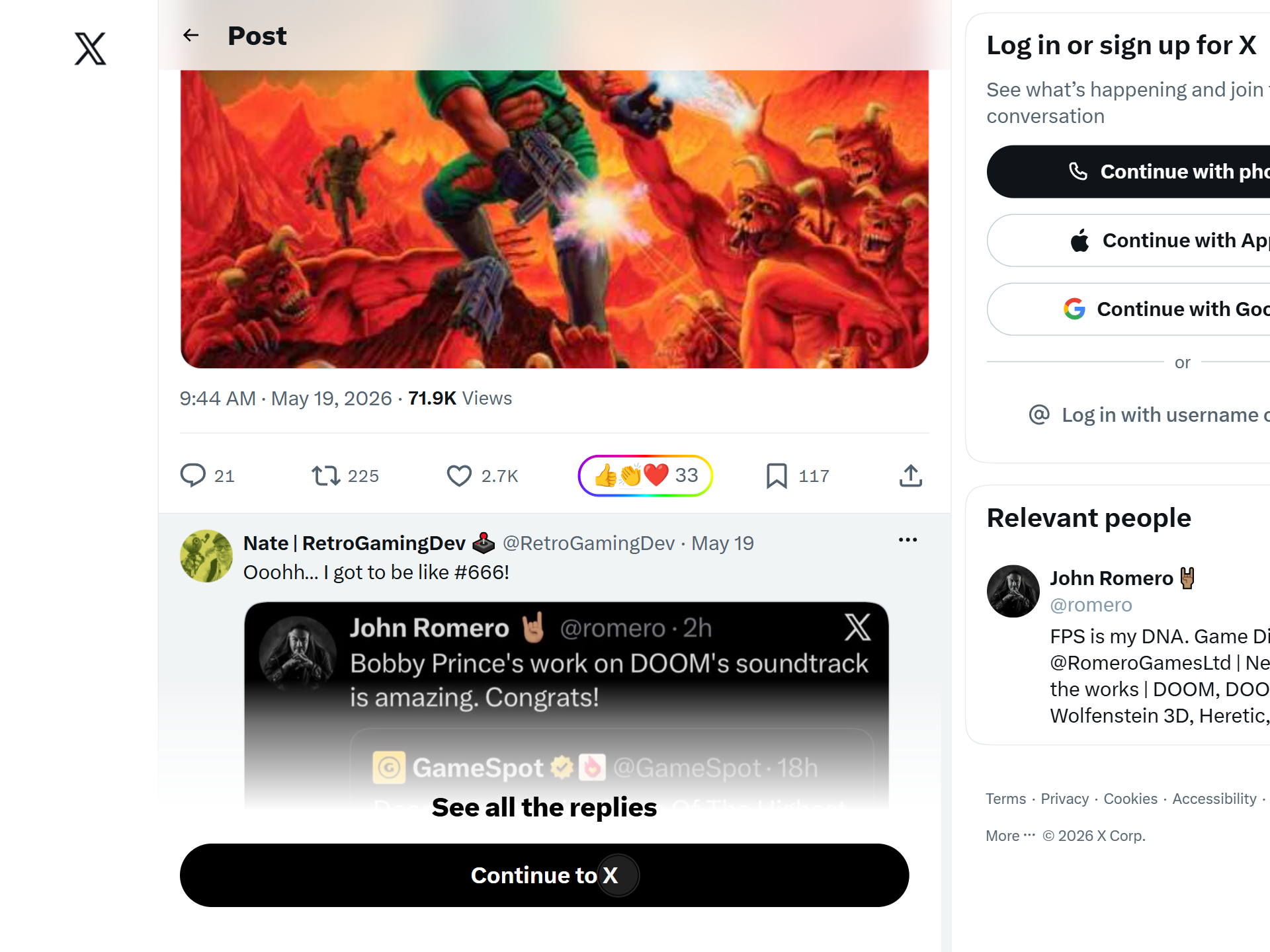
On X, formerly Twitter, the like is a single heart and the repost boosts reach. Both are useful, but they push every response through two fixed shapes. A heart has to stand in for "I agree", "this is funny", "this is sad", and "take this seriously", while a repost mixes endorsement with plain amplification.
Webemoji keeps Like and repost intact and adds a second signal. Instead of choosing between a heart and a boost, people can pick from the same searchable emoji palette used across supported sites.
The X adapter targets public post permalinks and recognizes both x.com and twitter.com addresses for the same post. A reaction belongs to the canonical post URL, not to a timeline position, a search result, or a promoted slot, so it stays put whichever domain you arrived from.
Webemoji sits near the reply, repost, and like controls on a post. The trigger opens a searchable palette with reactions across smileys, gestures, hearts, symbols, objects, and more. Search works across the supported emoji labels, so people who already know what they mean don't have to scroll the whole grid.
Anyone can read reaction counts without signing in to Webemoji or X. Leaving a reaction takes a one-time email verification, so the count is tied to verified Webemoji accounts instead of throwaway handles. The public page shows aggregates, documented on the counts page, not a list of who reacted.
Photo pages on X use the same reaction model as the parent post, and a reaction attaches to the post's canonical URL. That keeps a single public target whether someone opens the post itself or one of its photos, so the emoji vocabulary carries across both without splitting the count.
The off-by-default Auto-press original buttons setting makes a positive emoji also press the X Like — one pick, one press, the same as clicking it yourself. X has no native dislike, so negative and neutral emoji press nothing, and un-reacting releases only a Like the extension pressed; one you clicked by hand is never touched.
Webemoji doesn't sign in to X or touch your account: it never Likes or reposts, since a reaction goes to Webemoji, not to X. It's keyed to the post's canonical URL, and because x.com and twitter.com resolve to that one target, it doesn't matter which domain you came from. Reading totals is anonymous, leaving one takes a single email verification, and only the aggregate is public, never the handles that reacted.
Read the full privacy policy.
Install Webemoji, open a public X (Twitter) post, and use emoji when Like or repost isn't specific enough.
Yes. The adapter recognizes x.com and twitter.com addresses for the same post, so a reaction lands on the same canonical target whichever domain you opened.
Yes. Posts and their photo pages are both supported surfaces, and a reaction attaches to the post's canonical URL so the count stays unified.
The same emoji reaction layer — one account, across every supported site.